





Class R prior approval scheme
The Classes R prior approval scheme in the UK allows agricultural buildings to be converted to a flexible commercial use without requiring full planning permission, provided certain conditions are met and prior approval is obtained from the local planning authority.
The Class R prior approval scheme aims to support rural economic development by allowing greater flexibility in the use of agricultural buildings, facilitating their conversion to various commercial uses that can benefit the local economy while ensuring that any significant adverse impacts are considered and mitigated.
This streamlined approach reduces the regulatory burden on property owners and encourages the adaptive reuse of agricultural buildings, contributing to sustainable development in rural areas.
Under Class R, agricultural buildings can be converted to the following flexible uses:
- Shops (A1)
- Financial and professional services (A2)
- Restaurants and cafes (A3)
- Business (B1)
- Storage or distribution (B8)
- Hotels (C1)
- Assembly and leisure (D2)
Conditions and limitations:
- The total cumulative floor space that can be converted under Class R must not exceed 500 square meters.
- The building must have been in agricultural use on or before 3 July 2012, or for a period of 10 years before the date development begins.
- Prior approval from the local planning authority is required to assess:
The process for obtaining prior approval involves submitting an application to the local planning authority, which will consider the potential impacts related to transport, noise, contamination, and flooding. If the authority does not respond within the statutory period (typically 56 days), the development is deemed to have prior approval and can proceed.
From May 2024, the Town and Country Planning Amendment Order (General Permitted Development, etc) 2024 comes into effect. Stating 'Class R (agricultural buildings to a flexible commercial use) of Part 3 (changes of use) is amended as follows. (2) For paragraph R (permitted development) substitute—'
“Permitted development R. Development consisting of a change of use of a building and any land within its curtilage from a use as an agricultural building to a flexible use—
- (a) falling within one of the following provisions of the Use Classes Order—
- (i)Class B2 (general industrial) of Schedule 1;
- (ii)Class B8 (storage or distribution) of Schedule1;
- (iii)Class C1 (hotels) of Schedule 1;
- (iv)Class E (commercial, business or service) of Schedule 2; or
- (v)Class F.2(c) (outdoor sport or recreation) of Schedule 2; or
- (b) for the provision of agricultural training.”.
(3) In paragraph R.1 (development not permitted), in sub-paragraph (b), for “500 square metres” substitute “1,000 square metres”.
(4) In paragraph R.2 (conditions), at the end of sub-paragraph (c) insert— “;
- (d) where the site is to be used for general industrial purposes within Class B2, it must only be used for the processing of—
- (i) raw goods, excluding livestock, which are produced on the site and are to be sold on the site, or
- (ii )raw goods mentioned in paragraph (i) together with goods ancillary to the processing of those raw goods”.
[edit] Related articles on Designing Buildings.
- Alterations to existing buildings.
- Article 4 direction.
- Change of use class.
- Class Q permitted development.
- Class Q prior approval scheme.
- Class S prior approval scheme.
- CLC calls for rethink of permitted development rights.
- Conservation area.
- Enforcement notice.
- Established use certificate.
- IHBC responds to supporting defence infrastructure and the future of time-limited permitted development rights.
- Lawful development certificate.
- Listed building.
- Local development order.
- National planning policy framework.
- Permitted development: The end of the high street or a blessing in disguise?
- Planning enforcement.
- Planning permission.
- Prior approval.
- Renovation.
- Section 215.
- Sui generis.
- Town and Country Planning Act.
- Town and Country Planning (General Permitted Development) (Amendment) (England) Order.
- Use class.
Featured articles
Check out some of the best features and news from Designing Buildings as well as key stories from around the web.

The heritage of nuclear and conventional power stations.
New measures to stop people being ripped off

Government to protect families from cowboy builders and aggressive bailiffs.

New Futurebuild showcase brings an innovation-first approach.
National Planning Policy Framework
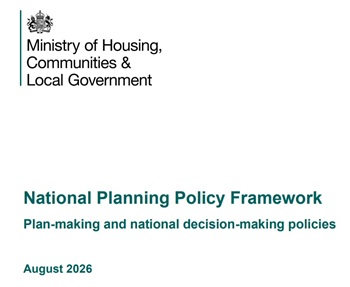
Understanding the 2026 changes.
ECA's public affairs priorities

Member consultation opens to shape priorities for 2027 to 2030.

Dutyholder responsibilities from 1 July 2026.
Where performance meets practice

The Building Envelope Stage at UKCW Birmingham.
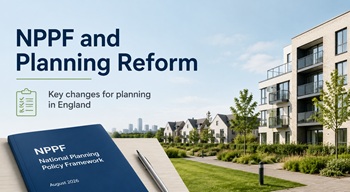
CIAT publishes briefing on planning reforms.
Leaders in Learning for Practice Network

Call for conservation leaders in learning to register interest in new network.
The importance of early engagement

Construction lessons from the Trillium HealthWorks Experience Centre.
Mayors are to be given planning call in powers
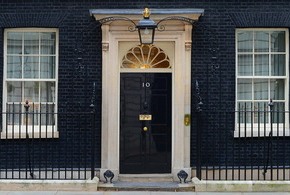
Mayors across England will be able to make the most important planning decisions.
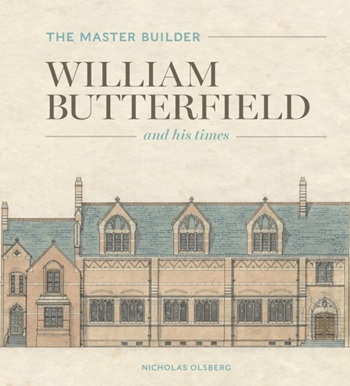
The Master Builder: William Butterfield and his times. Book review.